
Cavities are one of the most common dental problems — especially in children. But there is a quick, simple treatment that can significantly lower the risk of getting them. Dental sealants are thin protective coatings applied to the chewing surfaces of the back teeth to keep decay out.
If you have been wondering about dental sealants near you, this guide explains everything you need to know in plain, easy-to-understand language.
What Exactly Are Dental Sealants?
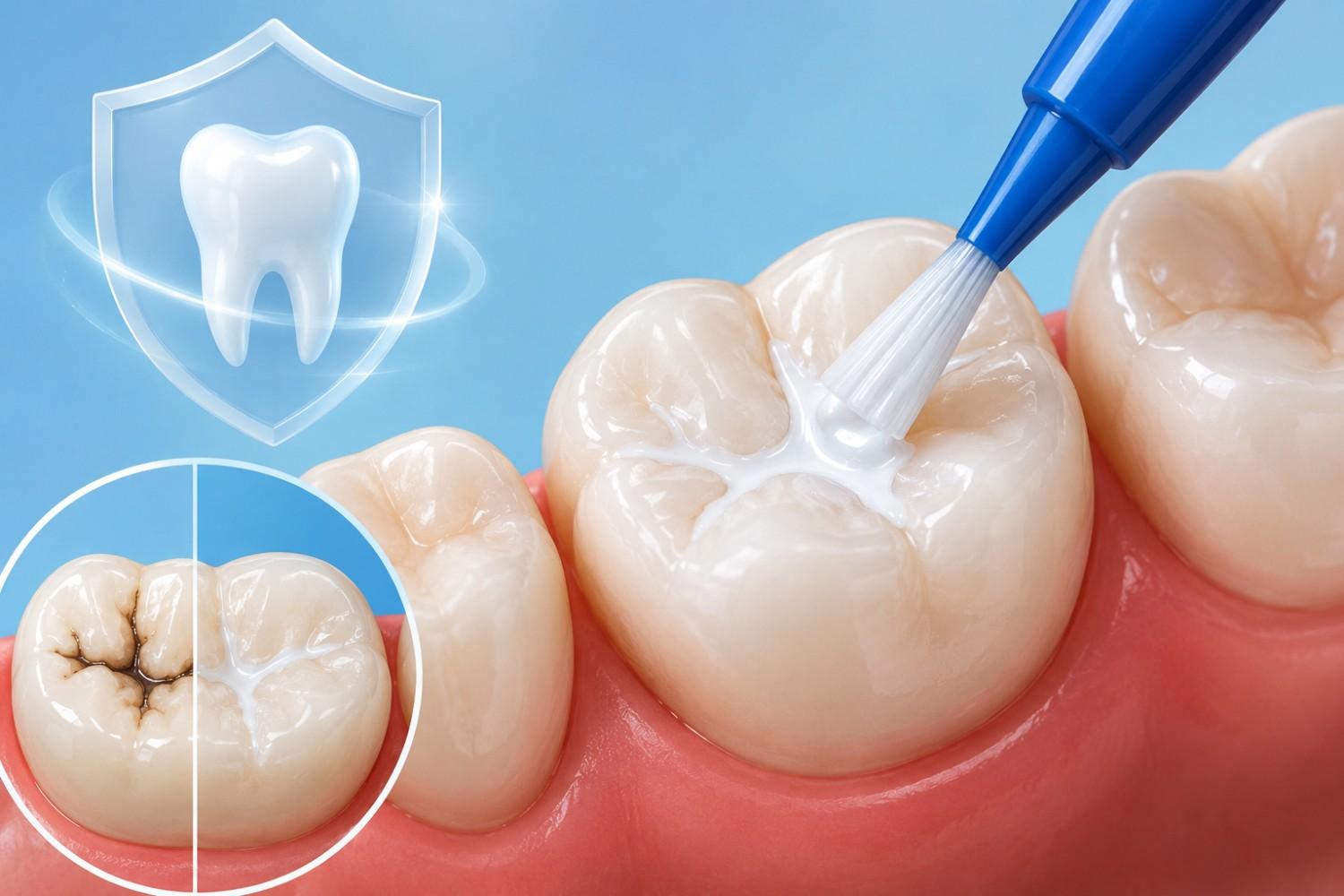
Your back teeth — the molars and premolars — have lots of tiny grooves and pits on their chewing surfaces. These grooves are great for grinding food, but they are also perfect hiding spots for bacteria and food particles. Even careful brushing often misses these narrow spaces.
A dental sealant is a thin, plastic-like coating that is painted directly onto those grooves. It hardens and forms a smooth barrier over the surface of the tooth. That barrier keeps food and bacteria out, which means cavities are far less likely to form in those areas.
Finding a reliable dental clinic near you that offers sealants is one of the best preventive steps you can take — especially for children and teenagers.
How Are Dental Sealants Applied?
The process is quick, simple, and completely comfortable. There are no needles and no drilling involved.
Here is what happens step by step:
- Cleaning—The tooth is cleaned and dried thoroughly before anything is applied
- Preparation—A mild solution is applied to the chewing surface to help the sealant bond properly
- Rinsing and drying—The tooth is rinsed and dried again
- Application—The sealant is painted onto the tooth surface in liquid form
- Hardening—A special curing light is used to harden the sealant in place within seconds
The whole process for one tooth takes just a few minutes. Most children sit through the entire appointment without any discomfort at all.
Who Should Get Dental Sealants?
Sealants are most commonly recommended for children and teenagers. The best time to apply them is shortly after the permanent molars come in—usually between the ages of 6 and 14. Getting sealants early means those teeth are protected during the years when cavities are most likely to develop.
That said, adults can benefit from sealants too. If your back teeth have deep grooves but no existing fillings or decay, sealants are a smart protective option at any age.
Your dentist will check your teeth and let you know whether sealants are a good fit for your situation.
Are Dental Sealants Actually Necessary?
Sealants are not absolutely required—but they are one of the most effective preventive tools available in dentistry.
Here is a simple comparison to help you understand their value:
| Without Sealants | With Sealants |
| Back teeth grooves remain open and exposed | Grooves are sealed and protected |
| Bacteria and food easily get trapped | Bacteria have no space to hide |
| Higher risk of cavities forming | Significantly reduced risk of decay |
| May lead to fillings, which cost more | Prevents costly treatment down the road |
| Requires a very precise brushing technique | Adds protection even with normal brushing |
The cost of a sealant is much lower than the cost of filling a cavity. From a prevention standpoint, they make very good sense—especially for children who are still developing consistent brushing habits.
How Long Do Dental Sealants Last?
Sealants can last anywhere from five to ten years with normal use. Your dentist will check them at every routine visit to make sure they are still intact and doing their job properly.
If a sealant chips or wears down, it can be reapplied easily. The process is just as quick and simple as the first time.
Protect Your Smile Before Problems Start — Londonderry Dental Choice Is Here for You
Prevention is always better than treatment. Dental sealants are a fast, affordable, and highly effective way to protect teeth from cavities—especially during the years when they are most vulnerable.
Londonderry Dental Choice cares about preventing dental problems for patients of all ages and believes in doing it the smart way. If you have questions about the sealants process or if it is the right choice for you or your child, then come in for your consultation! Make an appointment today.
Frequently Asked Questions
Q1: Do dental sealants hurt to get?
Not at all — the process involves no needles, no drilling, and no discomfort, making it one of the easiest dental treatments to receive.
Q2: Can sealants be applied over a tooth that already has a cavity?
No — sealants are a preventive treatment and should only be applied to teeth that are free of decay. If a cavity is present, it needs to be treated first.
Q3: Will my child be able to eat normally after getting sealants?
Yes—your child can eat and drink as normal right after the appointment, though it is generally a good idea to avoid very sticky or hard foods immediately after application.
Q4: Are dental sealants covered by insurance?
Many dental insurance plans cover sealants for children up to a certain age—it is worth checking with your provider before the appointment to understand your coverage.